.png)
Why Routines Matter More Than Motivation

Motivation is brilliant when it turns up.
You know those days when you wake up feeling like you've suddenly become the sort of person who has their entire life together? You're going to drink all the water, get your steps in, eat properly, clear the to-do list, go to bed on time and probably reorganise a cupboard while you're at it.
And then there are the other days. The days when the alarm goes off and you'd quite happily negotiate another three hours in bed. The weather is awful, you've got too much to do, the healthy lunch you planned doesn't appeal and going for a walk is somewhere near the bottom of the list.
That's the problem with relying on motivation.
It's a feeling. And feelings change.
I've learned that if I only do the things that are good for me when I feel particularly motivated to do them, I'm probably not going to do them very consistently.
That's where routines come in.
A routine doesn't mean having your life perfectly organised
I think the word routine can make us imagine something far more impressive than it needs to be.
A 5am alarm. Meditation. Journalling. A green smoothie. Ten thousand steps before breakfast. An elaborate skincare routine followed by an hour of yoga. All before the rest of us have located the coffee 😂
But a routine is really just something you do regularly enough that it starts to become part of normal life.
You probably already have dozens of them without thinking about it. The order you do things when you get up. When you make your first coffee. Where you put your keys. What you do before bed.
They're not exciting. You probably don't need motivation to do them. They're simply things you've repeated often enough that you don't have to think very hard about them anymore.
And that's exactly why routines can be so useful when you're trying to make healthier changes.
The less I have to negotiate with myself, the better
There are some decisions I am exceptionally good at talking myself out of.
I'll do it later.
I'll start again tomorrow.
One day won't matter.
I'm too busy today.
And sometimes those things are completely true. Life happens, plans change and occasionally rest genuinely is the better option. But having some basic routines means I don't have to make every decision from scratch every single day.
If I've already decided roughly when I'm going to move, what I'm likely to eat for breakfast or when I'm going to start winding down for bed, there's less opportunity for a full committee meeting to take place in my head first.
It doesn't guarantee I'll always do it. It just makes doing it easier.
Routines can reduce decision fatigue

We make an enormous number of decisions every day. What to wear. What to eat. What needs doing first. Whether that email needs answering now. What to cook tonight. Whether to go for a walk. Whether to have another coffee. What time to go to bed.
By the end of a busy day, sometimes I genuinely don't want another decision. I want somebody else to decide what we're having for dinner and ideally cook it too 😂
That's another reason routines can help. Having a few defaults removes some of those decisions.
Maybe you've got two or three breakfasts you regularly rotate between. Perhaps you automatically fill your water bottle when you make your morning coffee. Maybe Tuesday evening is the night you plan your meals, or you take a ten-minute walk after lunch without debating whether you fancy it.
None of those things is particularly groundbreaking.
That's rather the point.
They don't need to be impressive. They just need to make the things you want to do a little easier to repeat.
Start with the things that actually make a difference
One of the easiest ways to make routines fail is to decide you're changing everything at once.
New morning routine. New meal plan. New exercise schedule. Eight glasses of water. Earlier bedtime. Daily journalling. Ten thousand steps.
It feels fantastic for approximately four days. Then real life gets involved.
I've become much more interested in asking: what are the few things that would actually make the biggest difference to me right now?
Perhaps you know that eating a decent breakfast stops you raiding the cupboard by 11am. Maybe getting outside for twenty minutes noticeably improves how you feel. Perhaps preparing tomorrow's lunch the night before makes your working day easier.
Start there.
A couple of useful things you repeat are far more valuable than a twelve-step morning routine you abandon by Thursday.
Your routine needs to survive normal life
This is probably the most important bit. A routine that only works when nothing goes wrong isn't particularly useful.
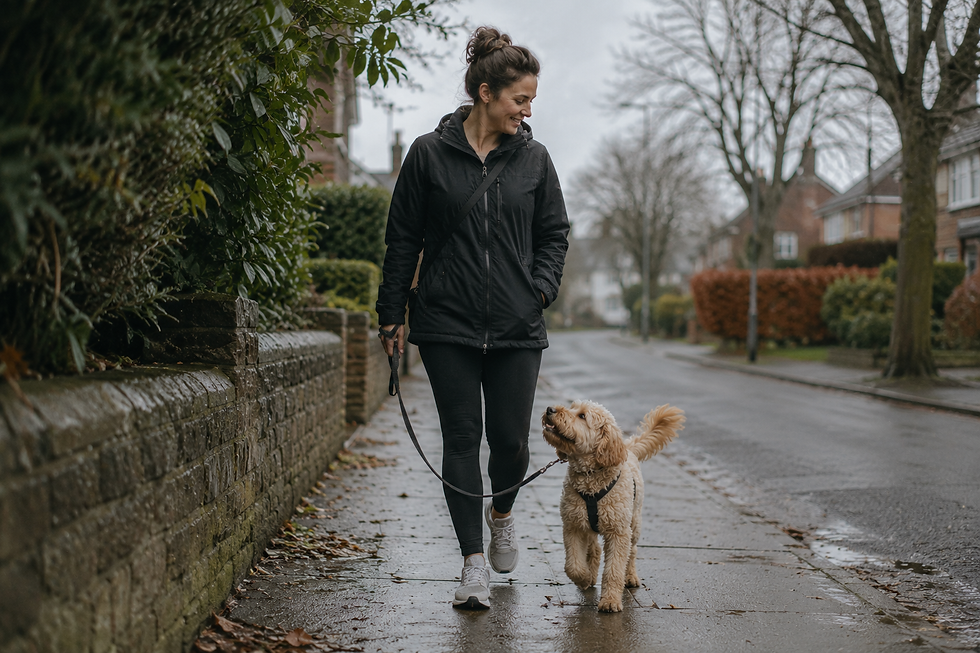
Real life has busy weeks. Late nights. Holidays. Work deadlines. Family commitments. Doggos that have other ideas. Days when you simply cannot be bothered. That's why I don't think routines should be rigid.
There can be a full version and a good-enough version.
Maybe your normal movement is a 45-minute walk, but on a hectic day you manage 15 minutes.
Maybe you usually cook something from scratch, but tonight you need the quick meal you've deliberately kept in the freezer.
Maybe your evening routine normally starts at 10pm, but you've been out and it's now considerably later.
Doing a smaller version isn't failing at your routine.
It's adapting it so it continues to work in your actual life.
And I think that's a much healthier way to look at consistency.
When routines stop working, change them
There's another side to this too. Just because something worked for you six months ago doesn't mean you're obliged to keep doing it forever. Life changes. Work changes. Energy changes. Priorities change. Seasons change. What you're trying to achieve changes.
Sometimes we hang onto routines because we've decided they're what we should be doing, even though they're no longer particularly helpful. There's nothing wrong with looking at something and thinking, actually, this isn't working for me anymore. Change it. Your routines are supposed to support you. You're not supposed to spend your life serving them.
Motivation still has its place
I'm not anti-motivation. Far from it.
That sudden burst of right, I'm doing this can be exactly what gets us started. It can help us try something new, make a decision we've been putting off or give us the initial push to change something.
The trick is using that motivation to create something that can continue after the feeling wears off. Because it will.
Instead of using a motivated Sunday afternoon to design a completely new life for Monday morning, perhaps use it to make one or two things easier for Future You.
Fill the fridge.
Put your trainers somewhere visible.
Plan a couple of meals.
Put the water bottle on your desk.
Decide when you're going to do the thing you've been putting off.
You're essentially letting Motivated You do some of the work for Can't-Be-Bothered You.
And personally, I think that's an excellent partnership 😂

The #HealthyVibes approach
For me, #HealthyVibes has never been about doing everything perfectly. It's about the small things we do repeatedly while normal life is happening.
Some weeks I'll be more organised than others. Some days I'll move more. Sometimes meals will be planned and sometimes dinner will be whatever I can assemble from the fridge. But having a few basic routines gives me something to come back to.
You don't need somebody else's perfect morning routine. You don't need to completely overhaul your life. And you definitely don't need to wake up every morning bursting with motivation.
You just need to work out which small things make your life work a little better, and make those things easier to repeat.
A final thought 💭
Motivation can be fantastic for getting started. But you can't rely on feeling motivated every Tuesday afternoon for the rest of your life. That's why I'd rather build routines that still work when I'm busy, tired, distracted or simply not feeling it.
Motivation might get you going. Routine makes it easier to keep going.
And ultimately, it's what you can keep doing that matters.


Comments